Matt Gemmell reviews Icon Resource.

April 16, 2008 on 6:44 pm | In Icon Design, IconResource, News

Matt Gemmell, legendary coder of Mac OS X source code and programming fame, has posted an expansive review of Icon Resource on his blog.

I genuinely feel like I learned a lot about what was previously something of a black art to me, and I couldn’t help but come away feeling enthusiastic about the prospect of creating some of my own icons for future software projects - or just for fun.

Check it out here if you’re interested!

Me on Pomcast.

April 12, 2008 on 1:53 pm | In Apple, Design, Graphics, Icon Design, Personal Work

pomcast-roundec.png

If you’re eager to hear a bit more about my work, my person, and the whole story with Apple, I recommend you listen to Pomcast’s latest English episode, where I and StuFF mc discuss Apple, graphical user interface design and a bunch of other things.

IconResource Launches.

April 2, 2008 on 12:00 pm | In Announcement, Commercial Work, Design, Graphics, Icon Design, IconResource, Personal Work

iconresourcelive.png

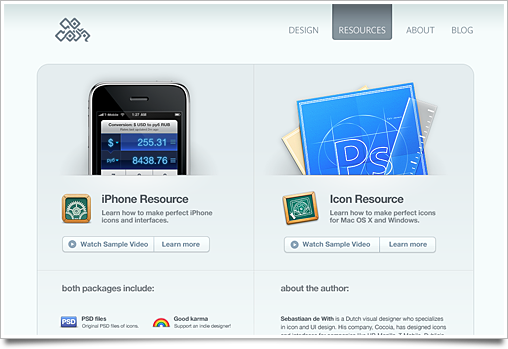
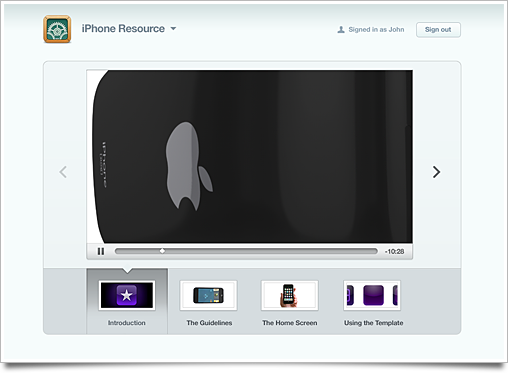
The day has come, and Icon Resource, the biggest project I’ve spearheaded since the start of my own company has gone live. You can now go to the Icon Resource website to watch a sample video, read more about the contents, or acquire your access to the polished Icon Resource member area.

Continue reading IconResource Launches….

Jon Hicks and making icons.

March 28, 2008 on 10:15 am | In Design, Graphics, Icon Design

Jon Hicks, talented designer, and renowned for the making of the Firefox and Pathfinder icons amongst others, has shared slides of his presentation on icon design. I found it an interesting look into the mind of a great designer.

Meet IconResource.

March 18, 2008 on 1:38 am | In Announcement, Design, Graphics, Icon Design, IconResource, Personal Work

iconresource.png

Although a bit earlier than I wanted to announce this, an inside scoop on the latest Mac Developer Roundtable forced me to put up at least something. IconResource is my biggest new project.

What’s IconResource? It’s a video series aimed at intermediate computer users (no Photoshop knowledge required), and aims to teach you about the theory and techniques of icon design. Basically, it teaches you A-Z how to make icons, directly from the source. To get a good insight into its ‘features’, visit the preliminary website.

A select amount of individuals have already been invited to ’sample’ the videos before release, and I will adhere to my March 26th release to the public. Pricing will also be announced at that time.

For now, don’t hesitate to leave your feedback on this great new endeavour Cocoia is embarking upon!

Bobby Andersen talks icons.

March 8, 2008 on 11:07 am | In Design, Icon Design

Bobby Andersen’s short talk on icon design and 3d icon design (at C4[1]) is now up on viddler, and I challenge you to watch it. Unlike Wil’s talk, it’ll consume about 20 minutes of your day - plus, you get to listen to one of the best icon designers around.

Let the new era begin.

March 6, 2008 on 8:08 pm | In Apple, Design, Graphics, Icon Design, Interface Design, iPhone

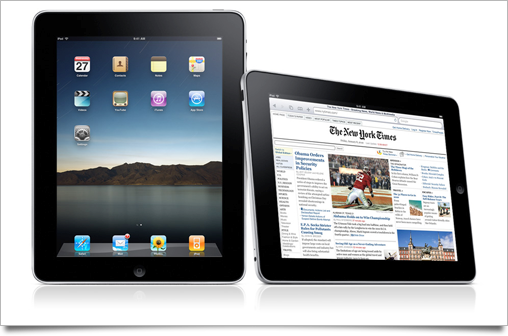
zzzdk.pngApple has just revealed the new, open Software Development Kit for the iPhone. It’s an exceptional program, which had been pre-seeded to developers. It allows developers to create native applications for the device, which had been highly desired since the start.

I was reasonably tight-lipped about this because I got a stash of email from companies a while before the keynote of today. I’ve been working on iPhone apps with developers for a few weeks now, and as such, I had been expecting a reasonably fully fledged SDK to appear. A device that already astonished people worldwide will now perform almost any desirable function, in a beautiful and revolutionary way. We truly stand at the brink of a user experience and software development revolution.

An online friend, Leonardo Cassarani, said:

Imagine something like Delicious Library’s barcode scanning on iPhones. You could read users’ reviews of the product you’re considering buying. Or auto-update your delicious library via the web. How about keeping a wishlist as you go out for shopping, maybe record the store names and addresses so you can get back to it and buy it or integrate it with something like Amazon’s wishlist?

This is a perfect example of why this is going to change a lot of things in the software industry. Not to mention, the target audience of people owning an iPhone will soon be much larger than the audience of desktop software - especially Mac software.

Although it’s not looking great for application icons, currently (the ones in the presentation were mediocre at best), you can imagine my enthusiasm about creating interfaces for all these great new applications, with a more interactive usage model than ever before. New applications are even promised a way to poll the iPhone for its location, it’s acceleration and tilt - making a game that responds to the way you hold the device an ‘obvious idea’. Where there was a limited model of development first, it seems the only boundary right now is the creativity of the designers and developers working with this.

I would say I expect to see a lot of cool apps coming out in June, but fortunately, I won’t. I know for sure that we’ll see a lot of great apps in June.

Edit: Thomas made this funny point:

Your shopping-oriented examples are really just slightly modified versions of the same hoary old “imagine if you could buy a soda..with your phone” that we’ve been hearing forever… (entire comment)

I think that if you feel this way, you’re failing to see the implications to anything in the web and desktop application spectrum today. Social networking, content exchange, collaboration, and more of such concepts in software are about to be reinvented in ways oriented at the most pleasant interaction model in existence. There’s bound to be some great rethinking of rusty conventions and repairing of broken implementations of good ideas.

Silenzio.

March 5, 2008 on 6:02 pm | In Icon Design

I’m having a silent week or two before the launch of my biggest projects. I haven’t a lot of stuff to write about either, so I don’t expect a lot of posts until March 14th. At least I can give a tiny teaser of the smallest project, which is still… quite sizeable. I plan to release a ton of stuff at once, so check back soon.

orionpung.jpg

I’ll see you all when this place goes boom!

The first Photoshop icon.

February 23, 2008 on 7:13 pm | In Design, Graphics, Icon Design

While I was doing some research for one of my upcoming projects today, I found the very first Photoshop icon. It’s actually a tiny little photo shop! I love it, and if I have some free time I’ll see if I can recreate it in a more modern style.

photoshop.png

What particularly strikes me is that they’ve gone through great lengths to let anyone be able to determine what it is; the ‘1HR’ signage obviously indicates the ‘photo’ part in ‘Photoshop’ and the man with the teller is the ’shop’ part. Very, very cool.

Edit: Addendum with the History of Photoshop, and color versions of these pre-Photoshop 1.0 icons. Be sure to check out John Knoll’s response in the comments down here.

colorpsicons.png

Icons, pictograms, or glorified rebuses?

February 9, 2008 on 1:18 pm | In Apple, Design, Graphics, Icon Design

I was talking with a friend about the definition of icons the other day, sparked by this blog post from Khoi Vinh. In this short post, Khoi shows his dissatisfaction with the way icon design has gone.

… the majority of commonly accepted and commercially functional icons in use today are visually literal — they represent objects or combinations of objects, even if they are intended to stand in for abstract concepts — and they’re almost exclusively dimensional.

By contrast, I like incredibly abstract and minimal graphical elements. For me, a simple, one-pixel straight line is practically a revival of the Rococo style. If I had my way, the only pictorial components of my design work would be the pictures: photographs or illustrations. Everything else would be simple and elementally native to the browser, or whatever other rendering mechanism I’m working with. Which is to say, you’d only ever see lines and boxes — and flat ones at that. No shading, please, and no three-dimensional modeling.

While this notion isn’t new, and the post isn’t new either, the ball really got rolling when I was overtalking it. I think everybody has a notion of what an icon is; a representation or pictogram to represent a certain feature or object of the software world. This could be an application, opening a new tab in your browser, or a folder on your hard drive.

In today’s world of the OS X Aqua and Vista aesthetic, this means giving icons a close-to-real-life (dimensional) appearance to conform to platform style. I can’t see how goblets of glossy liquid in the interface fit into this, but it’s clear the icons long since have headed to the photorealistic appearance we got accustomed to. However, this notion is countered the pictograms in the signage we all know from subways, airports, and other major public places, which Khoi advocates in his post. This offers the question of my blog post; “have we swerved too far from traditional pictograms to really define the (particularly, application) icons we use today as ‘icons’?


Continue reading Icons, pictograms, or glorified rebuses?…

Next Page »